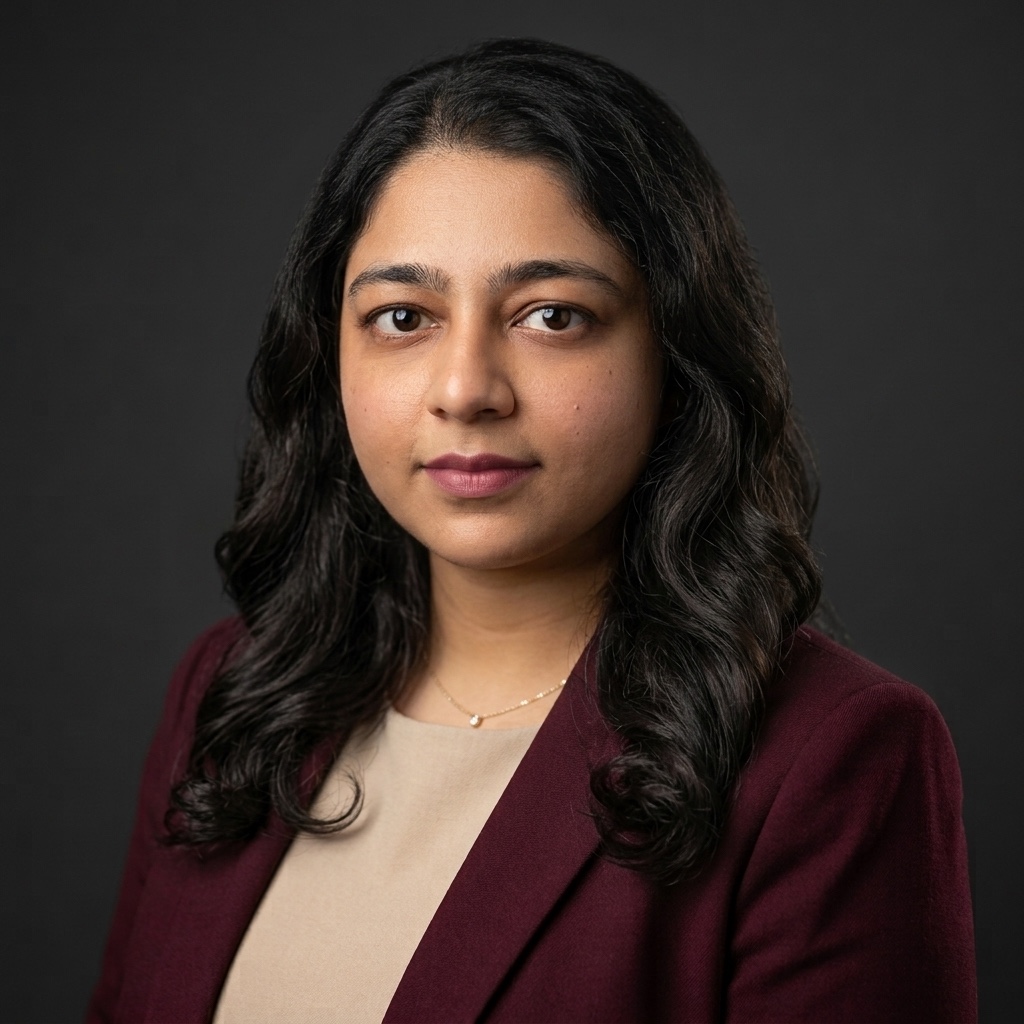
 Research Interests:
Neha is interested in building computational tools that turn complex data into clear biological insight. Her work focuses on multi-omics and transcriptomics, RNA processing changes in neurological disorders, and AI-assisted pipeline development.
Education and training:
Neha received her M.S. in Bioinformatics from Boston University, where she helped build a multi-omics Alzheimer’s disease knowledgebase integrating ATAC-seq, RNA-seq, and ChIP-seq data into cell type-specific regulatory networks. This work contributed to two co-authored abstracts published in European Neuropsychopharmacology. As an AEOP Fellow at the Walter Reed Army Institute of Research, she designed multi-omics pipelines to study traumatic brain injury and recovery, integrated transcriptomic, metabolomic, lipidomic, and microbiome data to characterize systemic responses to gastrointestinal injury, and modeled blood biomarkers as early predictors of infection and non-union in a clinical healing study. At the National Cancer Institute (NIH), she used TCGA and ICGC data to build an XGBoost model that identifies transcriptional phenocopies of the KRAS-G12D mutation, then extended it to single-cell data and used spatial transcriptomics to study the microenvironments these cells prefer. Currently, as a Bioinformatics Analyst in the Yalamanchili Lab at the Neurological Research Institute, Baylor College of Medicine, she analyzes single-cell, spatial, and multi-omics data for the lab’s RNA processing research and its collaborators.